

New Portable Comfort Solution Launches for Use Across Travel, Work, and Humanitarian Settings
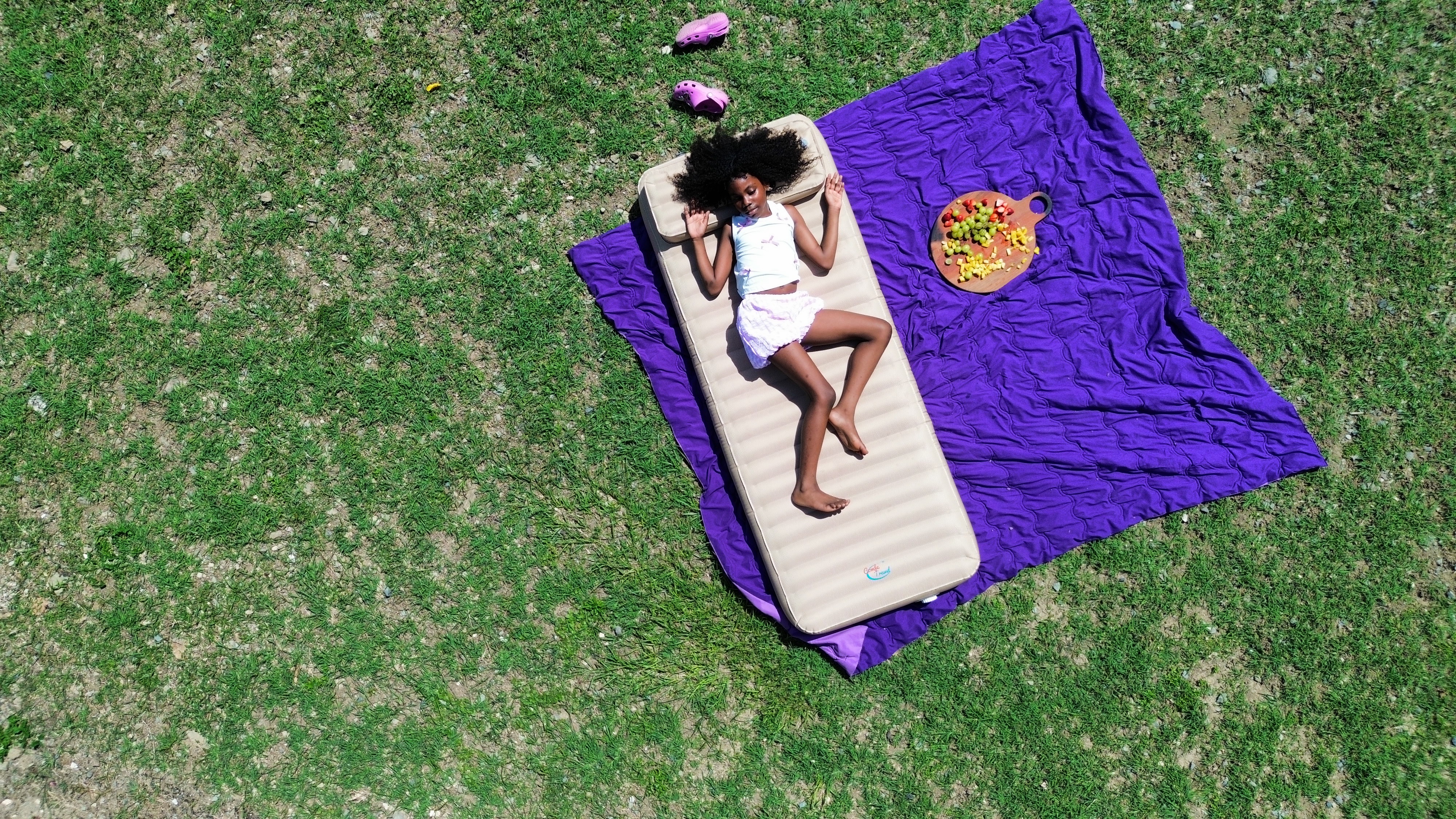
A new category-defining solution bridges consumer, commercial, and humanitarian markets by treating comfort as essential infrastructure
NEW YORK , NY, UNITED STATES, December 4, 2025 /EINPresswire.com/ -- A newly launched portable comfort product is entering the market with a clear and unconventional premise: that rest and privacy should be treated not as optional conveniences, but as basic human rights. Designed for use across consumer, enterprise, and humanitarian settings, the product addresses long-standing gaps in how people experience comfort, dignity, and personal space in mobile and temporary environments.The product is the work of founder and innovator Lori-Ann Ravalier, whose career has increasingly focused on the intersection of human need, mobility, and design. Rather than approaching comfort as a luxury feature or lifestyle add-on, Ravalier set out to create a practical, scalable solution capable of functioning in crowded airports and festival campsites, corporate and logistics settings, and crisis-affected environments such as shelters and temporary camps.
At its core Comfee Travel products function as a lightweight, portable personal space designed to move with individuals rather than relying on fixed infrastructure. It is engineered for ease of use, durability, and adaptability, providing a private, enclosed environment that allows users to rest with a greater sense of safety, control, and emotional reassurance.
According to the company, development was guided by years of observation and listening across a wide range of contexts: people sleeping in transit, individuals displaced by crisis, families navigating temporary accommodation, and workers operating in high-mobility roles. These insights shaped a design philosophy that places dignity and usability on equal footing with commercial viability.
“The common thread across all of these environments is the same,” said Ravalier. “When people lose access to privacy and rest, everything else becomes harder. I wanted to build something that acknowledges that reality and offers a practical response.”
The result is a product that combines intelligent construction with portability, allowing it to be deployed quickly and used repeatedly across different scenarios. Early testers describe the experience not simply as increased comfort, but as a restoration of personal space something often absent in mobile or high-density settings.
The product has generated early interest from a diverse set of partners, reflecting its unusual ability to operate across sectors that are rarely addressed by a single solution. In consumer markets, it appeals to travelers, remote workers, outdoor enthusiasts, festival-goers, and individuals who spend extended periods away from stable accommodation. Rather than positioning comfort as a premium feature, the product offers users a consistent, personal environment regardless of location.
In B2B and enterprise contexts, organizations have identified clear operational value. The product’s durability, scalability, and ease of integration make it relevant for logistics providers, employers supporting mobile workforces, and companies seeking human-centered solutions that align with evolving expectations around wellbeing and care.
While commercially viable, the product was intentionally designed with humanitarian use in mind. In emergency and displacement contexts, privacy and rest are often the first casualties of overcrowding, limited resources, and temporary infrastructure. Humanitarian organizations involved in early discussions have described the product as addressing a critical but under-served need.
Field-ready materials, simple deployment, and adaptability to harsh conditions position the product as a potential addition to shelter, camp, and emergency-response environments offering individuals and families a measure of autonomy and dignity in situations where personal space is scarce.
Ravalier has emphasized that humanitarian application is not an afterthought, but a core design consideration one that exists alongside commercial strategy rather than in opposition to it.
What distinguishes the launch, according to industry observers familiar with the project, is Ravalier’s ability to operate fluently across consumer, commercial, and humanitarian domains without diluting the underlying mission. She has been described as equally comfortable discussing supply chains and pricing models as she is addressing questions of human impact and ethical responsibility.
Early partners point to her clarity of vision and persistence in refusing trade-offs that would undermine either usability or purpose. Rather than separating “for-profit” and “for-good” thinking, the product’s strategy integrates both, positioning dignity-centered design as a commercially sustainable approach.
As demand grows across markets, the company sees the product not simply as a new entry, but as a signal of shifting expectations. By treating rest and privacy as essential infrastructure rather than optional extras, the launch challenges conventional boundaries between lifestyle products, workplace solutions, and humanitarian equipment.
Comfee Travel is currently expanding partnerships, pilot programs, and distribution discussions as it prepares for broader market availability.
Alfie Brown
A-B MEDIA
+44 7876 586946
email us here
Visit us on social media:
LinkedIn
Legal Disclaimer:
EIN Presswire provides this news content "as is" without warranty of any kind. We do not accept any responsibility or liability for the accuracy, content, images, videos, licenses, completeness, legality, or reliability of the information contained in this article. If you have any complaints or copyright issues related to this article, kindly contact the author above.
